

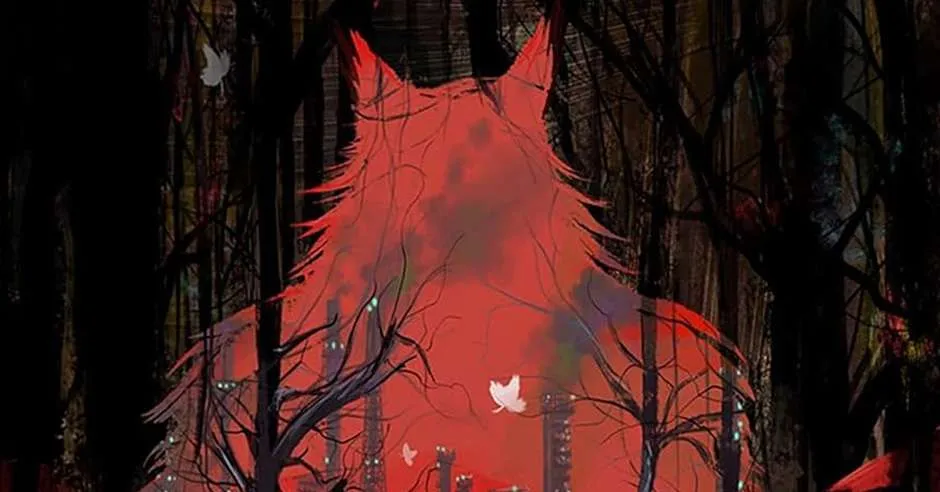
What happens when two friends who used to belong to a long-term, now broken-up gaming group start having similar thoughts about the quality of the tabletop role-playing experience independently? Well, they eventually start voicing those concerns, connections around similar feelings are made, and a new campaign arises. Thank, frickin’ God.
As usual, these posts about the game don’t break down the plot of sessions; they’re more my takeaways of the experience. You can check out the GM’s (Neil @omnihedron.co.uk on Bluesky) view of events as well.
Where I was at
Before I start this, I think it’s best I be honest about where I was with the tabletop role-playing game hobby. I thought it was on a slow trajectory to not being an active part of my life. What’s important is the reasons. I’d started to think that role-playing had become too routine and that I had no hobbies.
So, like most things in my life, they get adequate thought. What can I say? My metacognitive brain is always crazily connecting the points on the chalkboard with a string. All of these thoughts boil down to the following:
- I don’t just play; I want some vein of an interesting new challenge
- I want a rich experience
- I want exploration, not empty play loops on repeat
- I don’t value a campaign as a series of one-shot experiences
If those things aren’t present, I believe the experience is too passive. It doesn’t give me anything to think about. I don’t play many boardgames for a reason, because they don’t generate that thinking about thinking that I look for in a role-playing game experience.
Things had become too routine, which, in my experience, had led to a low-commitment loop.
There are numerous reasons for this, which the GM (Neil @omnihedron.co.uk on Bluesky – his view of events) and I had discussed. We had some core reasons and sources for it, and some that were different, but we broadly agreed on the current experience and outcome. I would even say that, as the gaming group of old disintegrated post-COVID and due to an emigration, we’d slowly started to lose a sense of the high-value elements I once valued across the table.
You could say this campaign was a moment to find a reset.
What we chose to do
After some back and forth, we chose to focus on a few things: –
- A 1-1 play experience, which we had done before as a one-shot
- An idea we could establish as a solid foundation for mutual creation
- Something new and different
When it comes to something new and different, I was more focused on the pitch than on the system. While it’s often said we play systems and then leave them behind, I don’t think this is true. I think we play hard to pitches, and sometimes that just happens to mean the system is also done. For example, the Werewolf: Accelerated campaign doesn’t affect our utility with Fate: Accelerated, since it was the pitch, not the system, we played hard.
In my head, the existence of having run Werewolf: Accelerated for what might be our second-longest campaign – I’m just guessing, as it was hard 2.5 seasons, so maybe ran to like 16-20 sessions – I wasn’t sure about diving into Werewolf again. We’d played the hell out of this pitch, right?
When Vampire 5th or Werewolf 5th was offered, I initially chose Vampire, but then we both thought it over and changed our minds. I switched because I’m not the biggest fan of urban games with politics, while Neil switched because he can do those games in his sleep. It didn’t have to be an urban game with politics, but there was enough coming from two different directions to shift our focus to what we could do with Werewolf.
A different pitch
The key was always going to be the pitch. I’d hit up ChatGPT about how the Werewolf: The Apocalypse 5th Edition was different from the 2nd Edition. The difference was important: the Werewolf: Accelerated game was a pitch we played the hell out of, a distilled vision of the 2nd-edition experience.
We then began discussing a similar idea from two slightly different perspectives. Jack Reacher and neo-westerns, not specifically Yellowstone, but the idea of putting old-school ‘Western genre’ philosophies and stories in a modern setting. Jack Reacher and neo-western shows weren’t so different for me; in the 3-4 Jack Reacher books I’ve read, the narrative setup is much more about a Clint Eastwood figure drifting into town than it is in the films and TV series.
I then started tossing around character ideas in my head as a lead-in to session zero.
Hitting session zero
This was critical because there was one thing that was likely to be a feature of this experience: it would feel just as much like an in-the-moment writers’ room as it would a sort of passive GM and player experience, and the lines would be blurred.
Once you’re in this zone, you need clarity of concept.
We discussed the vibes and features of the setting, the locations, and a dramatic crucible with many things orbiting it. This was a great process: some things went as I’d had them in mind, some changed, and other stuff I had on my phone I didn’t even bother bringing up. You never go into these processes with your ideas set; at best, you have just ideas to help you navigate the mutual creation process.
We established there is a small town Americana Romeo and Juliet story in the background that ended badly. A dead wife. A lost child in a moment of violence that is a mystery going into the series. We had visions of Americana, open roads, old school values like honour, revenge, standing up to be counted. Life having a hard edge. An attempt to merge the ‘war has been lost’ feeling of 5th edition with a neo-western vibe.
Character creation was interesting, as I wanted to maybe avoid my natural choices while not going crazy and trying to play some sort of Werewolf new-age hippy, as it would never work. The journey through character creation brought forth the Galestalker Philodox, literally a character on a solo quest for justice and answers. Cool stuff. It’s enough of what I tend to drift to, older values, solid principles and more direct action, while still being different.
While I’d always had an older sister in mind and his father-in-law is the power businessman of the small town, we added a Carnevale-type carnival, connections to a biker gang, and the fact that his father is the sheriff.
Neil then went ahead and wrote this stuff up as a great bible, giving names to things that didn’t have them, and establishing more context; the foundation for mutual creation was set.
Hitting the table
First sessions are always fascinating. A mixture of trepidation, feeling things out and seeing what specific things land. It was never going to be a TV pilot in the sense that it might not work, and the whole thing is junked, but these things do have that TV pilot feel, with the difference being that you’re writing it there and then in the moment.
I really liked it. It delivered on everything we wanted the game to be.
It had the usual challenges of me feeling things out and not yet being confident in the full milieu, but that’s only natural. I’m not sure it manifested as a lack of confidence, but rather an internal recognition that proactivity builds over time.
I saw the experience as being split into two halves. The journey home on the Greyhound bus saw Caleb encounter some ‘biker’ types who were definitely looking for him, but didn’t seem to want a confrontation there and then. This features a stop at a remote diner, where a bane was using its food to corrupt people. This was really cool and put forward at the table the sort of light, but not too byzantine, investigation and the personal horror element of the experience. While there is an overall story thread to follow, the format may also feature picaresque, isolated horror stories. We also nailed the visuals and the action.
I was leaning into things a bit more in the second half, which was when the character returned to his Colorado Mountains resort town home. This was really cool. We built up some great imagery around what his parents were like, their home, and the scene with his father about the mystery surrounding the death of his wife 15 years ago, and the violent events around the disappearance of his daughter were great. I’m not sure what the intention was for that one, but I leaned into the character’s feelings about it and what he had to hold onto to maintain any sense of purpose and sanity. I felt it was an example of the type of scenes we want, and I felt I leaned into it maybe a bit more than I normally would.
I mean, that scene with his father was very Taylor Sheridan.
Throw in some great imagery of the small town via a High-School Football game, sprinkling in new characters of the town in the process and the fact that his father-in-law is threatening to oust his father as sheriff, and some Black Spiral sorts are interested in him, and things came to an end.
After the event
I wasn’t 100% sure about the 1-1 format over an extended period, but I think it’s going to work. Not only will it work, but it also has a couple of major strengths.
Zero self-indulgence
When there are only two people involved, and they are in sync about purpose at the table, there is zero feeling of self-indulgence. At a typical 1-3 or 1-4 table, you’re always balancing spotlight time and the fact that each player has a different set of preferences. This can mean choosing to write your character through flashbacks, delivered diary entries (let’s face it, that’s Captain’s Personal Logs), or just playing scenes out for deeper issues that might take some time, can feel self-indulgent.
I’ve backed off certain things sessions in for this exact reason. This game doesn’t have that problem, and it’s going to be interesting.
The rich conversation
If the meat of a role-playing game is in the conversation, then 1-1 makes the conversation both complex, rich and simple all at the same time.
What I noticed as we were actually playing is that the content of our conversation switched moment to moment. In one fluid conversation, we established the facts as writers, discussed our understanding of them as players, discussed the characters’ understanding of them, switched to first-person scenes, and moved to the third person as required. It was almost a beautiful thing.
This happens all the time for us. We’ve never been afraid of the conversation being healthy across all its facets, rather than sticking to particular frames, but when it’s 1-1, it’s tight and fluid without worrying about monopolising time; it shifts, changes, and flows to get the most out of the moment.
It also means small errors of understanding are self-correcting, as you’re just self-correcting one person’s understanding or a character’s mental model as things flow rather than things that might have immediately spawned in five individuals’ heads.
It’s…different and interesting.
Potential to be tiring
A bit like a TV show where you’re the only real cast member, you’re in every scene, so it can potentially be a lot. I am sure that will hit at some point, but based on the first session, the advantages vastly outweigh this potential challenge.
Where will it go
We have no idea. We just know the style it will take. It’s pure play to find out. I’ve left the core central mystery as an emotional issue that drives the character, without specifying what it ultimately becomes. I’m in no rush to get there.
I think the only thing I have in my head, which is common as it features in my head all the time, is that we lean into the TV series feel of it, both in terms of the tone, the conceptual neo-western setup mixed with personal horror and the opportunity to shake things up. Lean into things. Take the opportunity for some episodes to be quite different from others.
After all, we don’t want it to become routine; it was one of the goals going in. It should be something we can explore and experiment with and be free, since it’s a campaign, to give it the time it needs.
Great stuff.